Review and plan
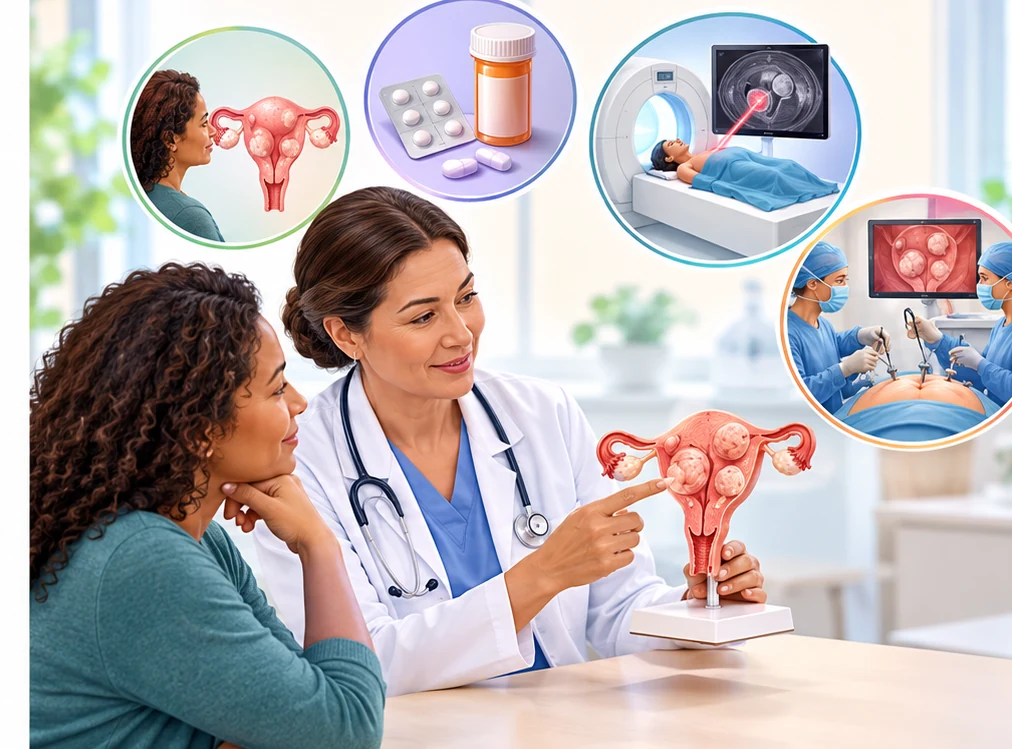
The team confirms the diagnosis, reviews scans, checks relevant tests and discusses the approach, pain relief, risks and alternatives.

Uterine artery embolisation (UAE), also called uterine fibroid embolisation (UFE), uses imaging and a fine catheter to reduce blood flow to fibroids. Explore how assessment works, what the procedure may involve, other choices, and questions to ask about recovery and future pregnancy.
Explore the guide ↓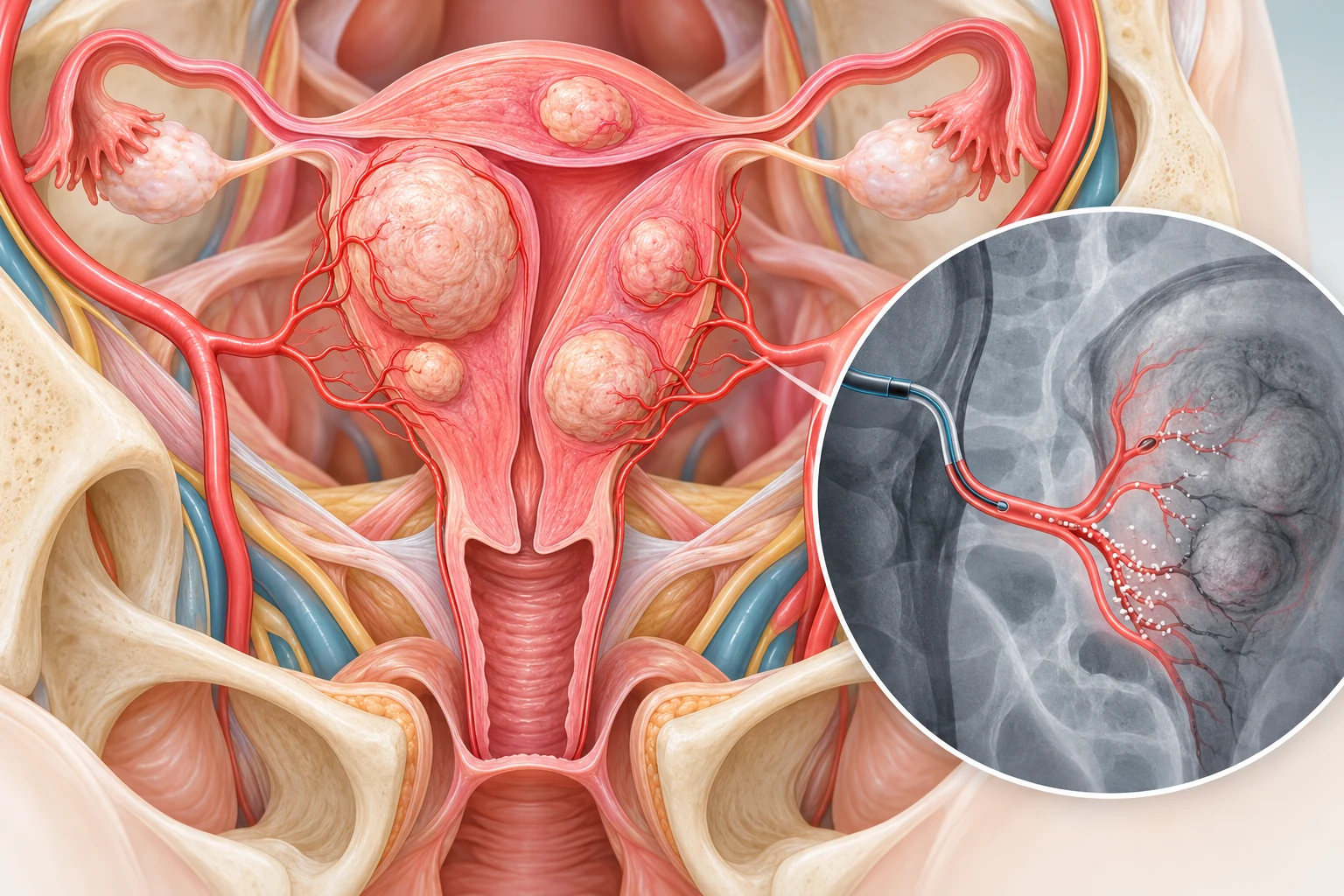
Fibroids are growths made from muscle and connective tissue in the uterus. They are usually non-cancerous, and some cause no symptoms. Their number, size and position differ; those details can influence symptoms and treatment choices.
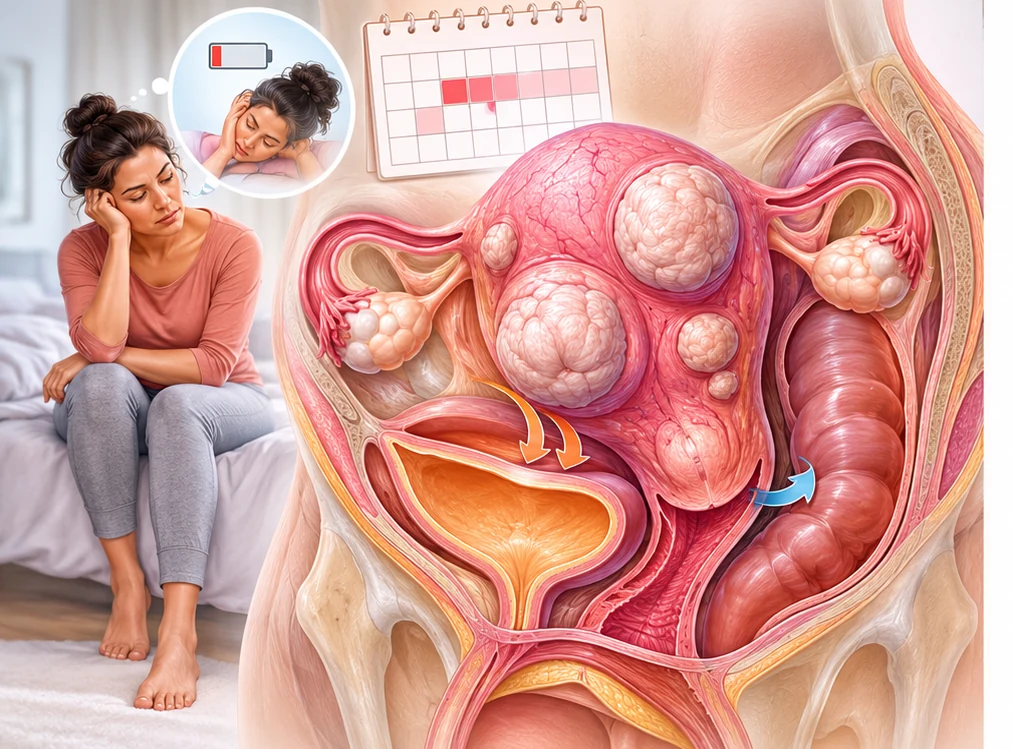
When symptoms occur, they may include heavy or prolonged periods, cramping or pelvic pain, pressure or fullness, and sometimes tiredness related to blood loss. Similar symptoms can have other causes, so assessment matters.
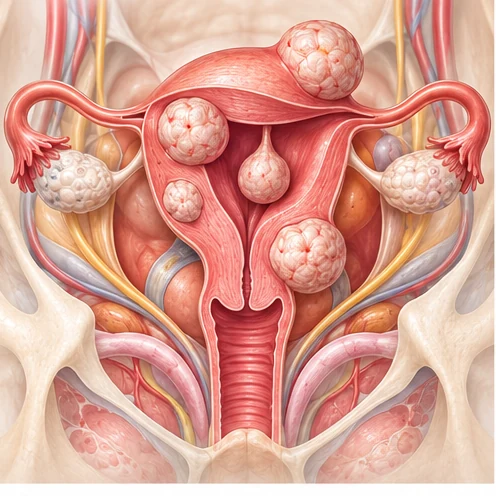
For some people, bleeding or pelvic pressure affects sleep, work, exercise or daily routines. For others, fibroids are found during an examination or scan done for another reason and cause little or no disruption. A clinician can help assess whether the fibroids are likely to explain what you are experiencing.
If bleeding is heavy or prolonged, ask whether a blood count or iron assessment is appropriate. Seek urgent care for very heavy bleeding with faintness, severe sudden pain, or other acute symptoms.
Assessment is usually shared between a gynaecologist and an interventional radiologist. They review the history, symptoms, goals, examination and imaging, then discuss the choices that fit the individual situation.
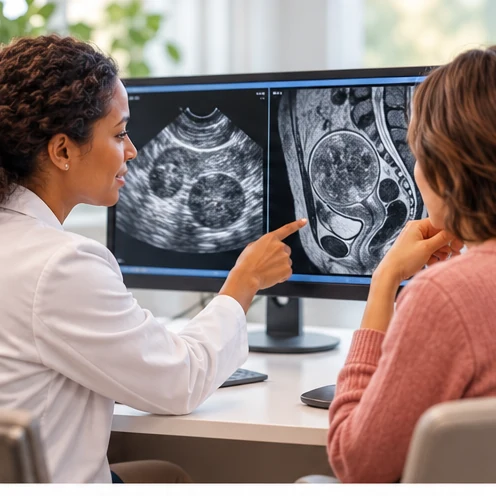
Ultrasound and/or MRI may be used to confirm fibroids and map their location. Blood tests can check for anaemia and kidney function; other tests depend on your health and planned care. Tell the team about medicines, allergies, previous procedures and any possibility of pregnancy.
Before embolisation is considered, the team also needs to check that the symptoms and imaging are consistent with fibroids and assess whether another diagnosis or treatment pathway should be considered.
No. Options can include monitoring, medicines, procedures to remove fibroids, uterine artery embolisation, or hysterectomy. Suitability depends on fibroid features, symptom priorities, health history and whether pregnancy is desired. A specialist should explain benefits, risks and likely trade-offs for each option.
UAE/UFE aims to reduce fibroid blood supply while leaving the uterus in place. It is not the same as removing fibroids individually (myomectomy) or removing the uterus (hysterectomy). No option can be selected from a website alone.
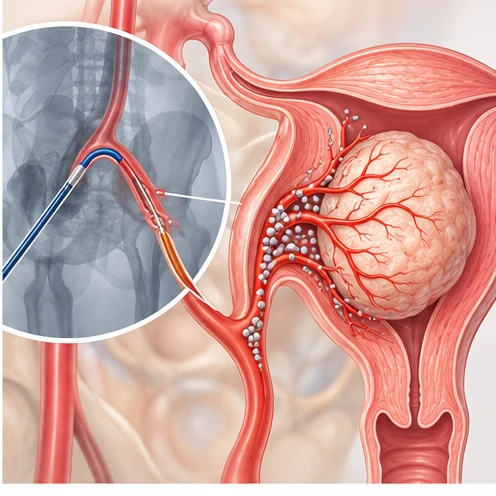
The interventional radiologist uses live imaging to guide a catheter through an artery to the blood vessels supplying the fibroids. Tiny particles are released to reduce blood flow to the targeted fibroids. The catheter is then removed and the entry site cared for.
The team confirms the diagnosis, reviews scans, checks relevant tests and discusses the approach, pain relief, risks and alternatives.
You may be asked to fast and change into a hospital gown. An IV line and monitoring may be used; follow the instructions from your own centre.
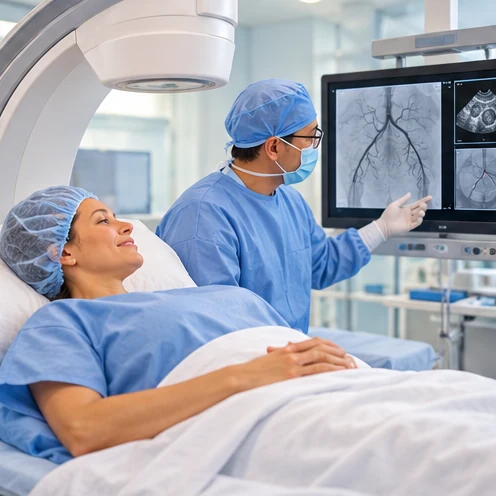
After local anaesthetic at the chosen access site, the catheter is guided under X-ray. Contrast dye helps show the arteries and their branches.
Particles are delivered into the uterine arteries as planned. Afterwards, staff monitor you and check the access site while pain and nausea are managed.
The entry route, medicines, pain-control method and length of stay vary. Some centres discharge people the same day; others keep them overnight. Your treating team’s plan takes priority.
Your team will give you individual instructions. They may ask you to fast for a specified period, review medicines, and complete blood tests and imaging. Tell them if you use an intrauterine device, have allergies, take blood-thinning medicines, or could be pregnant. Do not stop prescribed medicine unless your clinician tells you to.
Ask who to contact with questions, what pain relief is planned, whether you need someone to accompany you, and what support you will need at home.
Pelvic cramps or period-like pain are common after embolisation and can be strongest early on. Some people also experience nausea, tiredness or a mild temperature for a short time. The care team should provide a pain-management plan and explain how to take it.

There may be bruising at the catheter entry site, vaginal spotting or discharge, and temporary changes in how you feel. Fibroids shrink gradually, so bleeding or pressure symptoms may take several months to change. Rest, time away from work and activity restrictions depend on your health and the advice you receive.
Follow your discharge instructions. Contact the team urgently for fever or chills, worsening pelvic pain or swelling, heavy or increasing bleeding, foul-smelling discharge, passing tissue, or redness, swelling, bleeding or fluid at the catheter site. Severe illness or uncontrolled pain needs urgent assessment.
These can include access-site bruising or bleeding, infection, reactions to contrast, and rarely injury to the uterus or nearby organs. A fibroid may detach and pass through the vagina, sometimes needing further treatment.
Periods can change after treatment. Rarely, ovarian function may be affected and menopause may occur earlier, with greater concern as age increases. Ask how age and health history affect your own risk.
Symptoms may not improve enough, may return, or another cause may be responsible. Further assessment or another treatment can sometimes be considered.
UAE does not remove the possibility of future pregnancy, but fertility and pregnancy effects remain an important area of discussion. Your goals should be part of treatment planning from the start.
Some patient advocacy organizations mark July as Fibroid Awareness Month. This is an advocacy-led observance rather than a single, universally standardized international health date. Reliable information and access to assessment matter throughout the year.
Fibroids are common, but each person’s symptoms and goals are different. A balanced discussion should include non-procedural care and all appropriate treatment choices.
No. Tiny particles reduce blood supply so treated fibroids gradually shrink. They are not usually surgically removed one by one.
Not necessarily. Improvement can take several months as fibroids shrink. Your team will explain expected follow-up and what changes should prompt contact.
Pregnancy is possible, but effects on fertility and pregnancy outcomes are not fully certain. If pregnancy is a future priority, compare UAE with options such as myomectomy with your specialists before treatment.
Length of stay varies with local practice, access route, pain control and how you feel afterwards. Some people go home the same day; others stay overnight.
Use the contact details and emergency advice in your discharge plan. Promptly report fever or chills, worsening pelvic pain, heavy bleeding, foul-smelling discharge, passing tissue, or a problem at the catheter site.
This original patient guide paraphrases and synthesizes clinical patient information. It is not a substitute for a consultation. The BSIR leaflet used as a source is dated February 2020; current local instructions and newer guidance may differ.
Contact the practice to ask about appointments or referral requirements.
+91 70348-39446 · veindoctoraju@gmail.com