A clear guide to where varicoceles occur, how clinicians assess them, and what to expect if embolization is considered. Use it to prepare questions for your own care team.
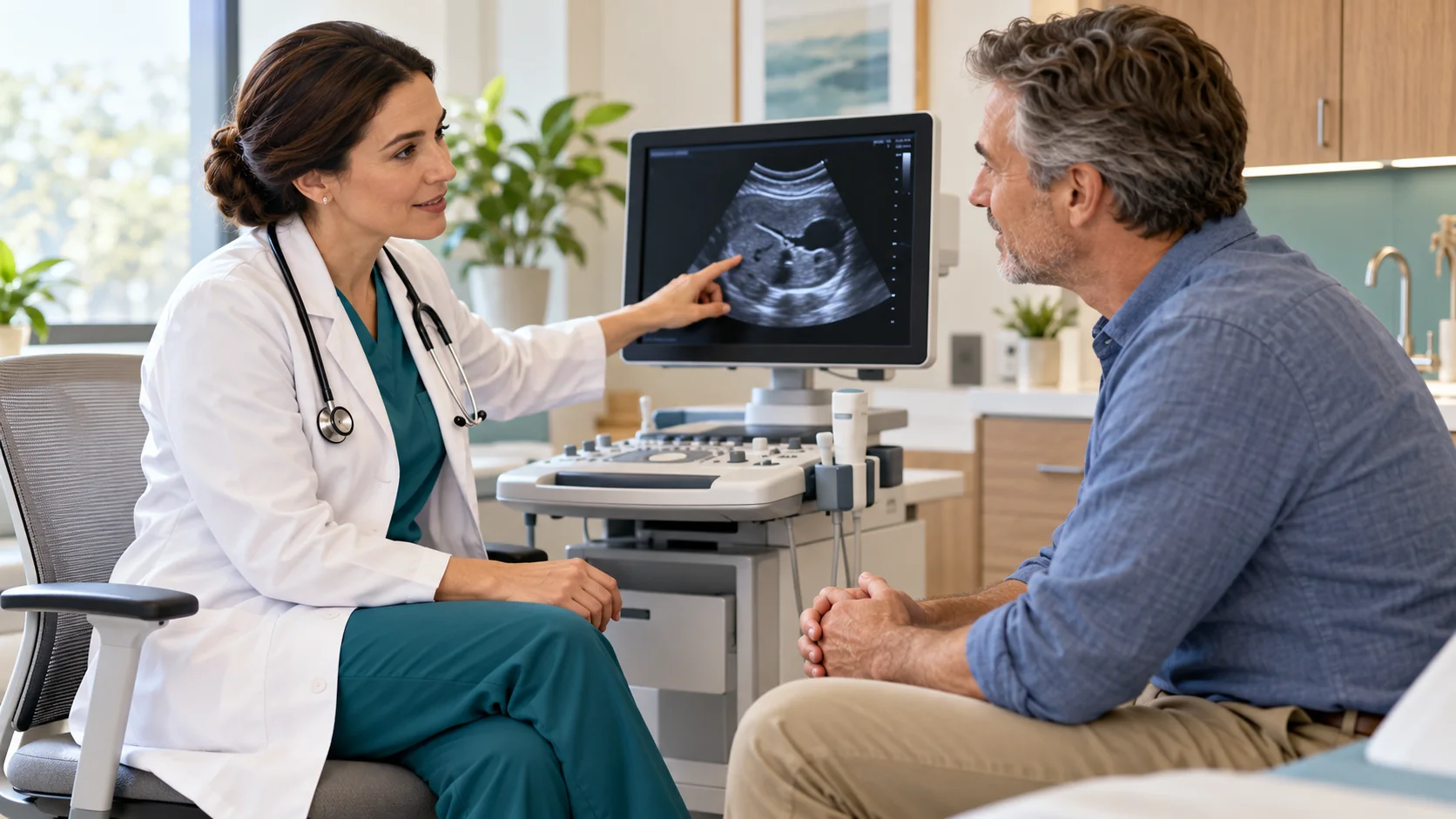
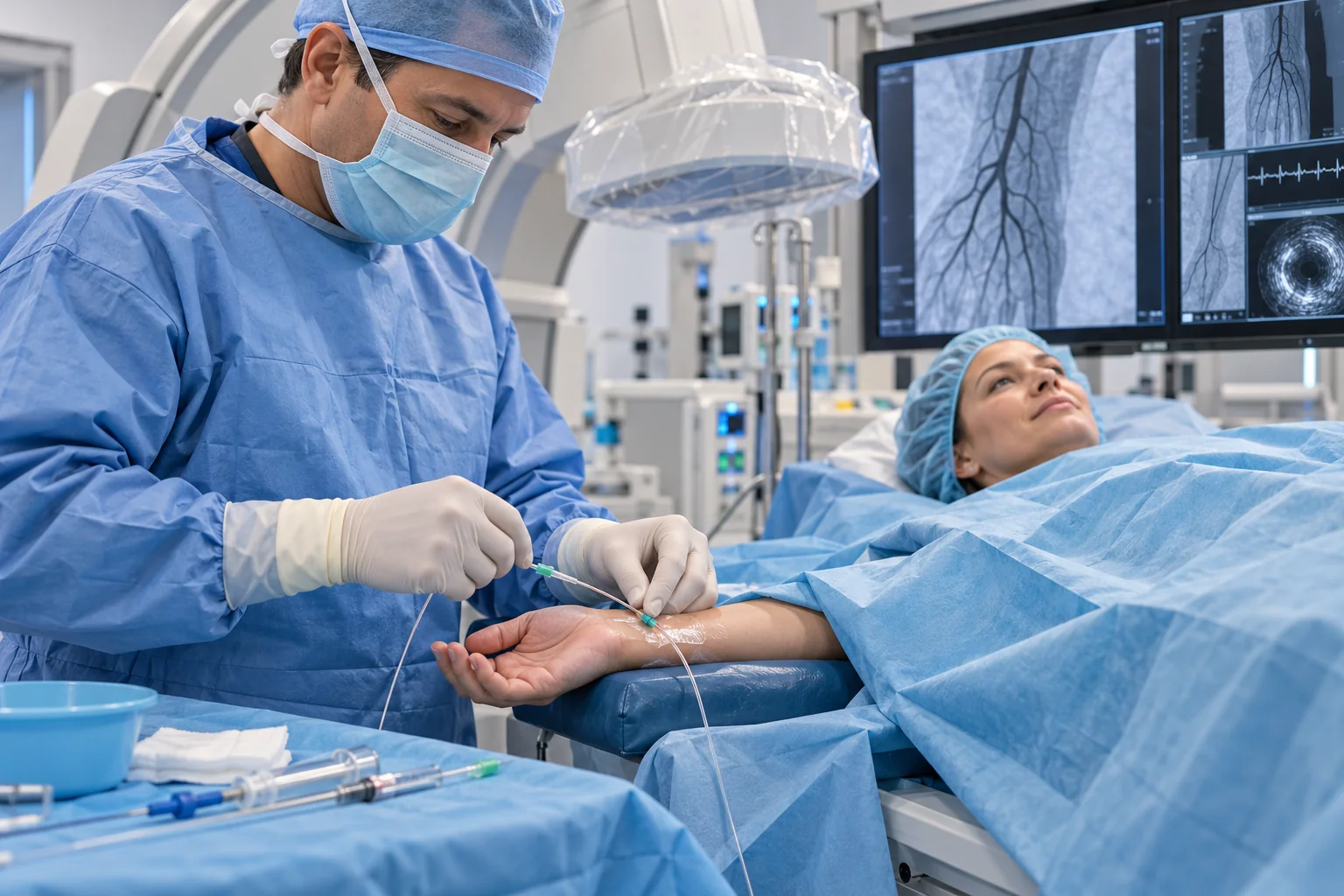
AI-generated illustrative consultation scene; not an actual patient or treatment result.
Where it occursVeins around the testicle, within the scrotum
How embolization worksA catheter guides coils or another embolic material into the affected vein
First stepClinical assessment; testing depends on symptoms and fertility goals
Understanding the condition
Where does a varicocele occur?
A varicocele is a group of enlarged veins that drain blood from a testicle. It occurs in the scrotum, around the testicle, and is more common on the left. One-way valves in these veins may not work as they should, allowing blood to pool under gravity and the veins to enlarge.
Some people notice an ache, heaviness, or enlarged veins that are more apparent while standing or later in the day. A varicocele can be associated with fertility concerns, but it does not mean someone is infertile and it does not always require treatment.
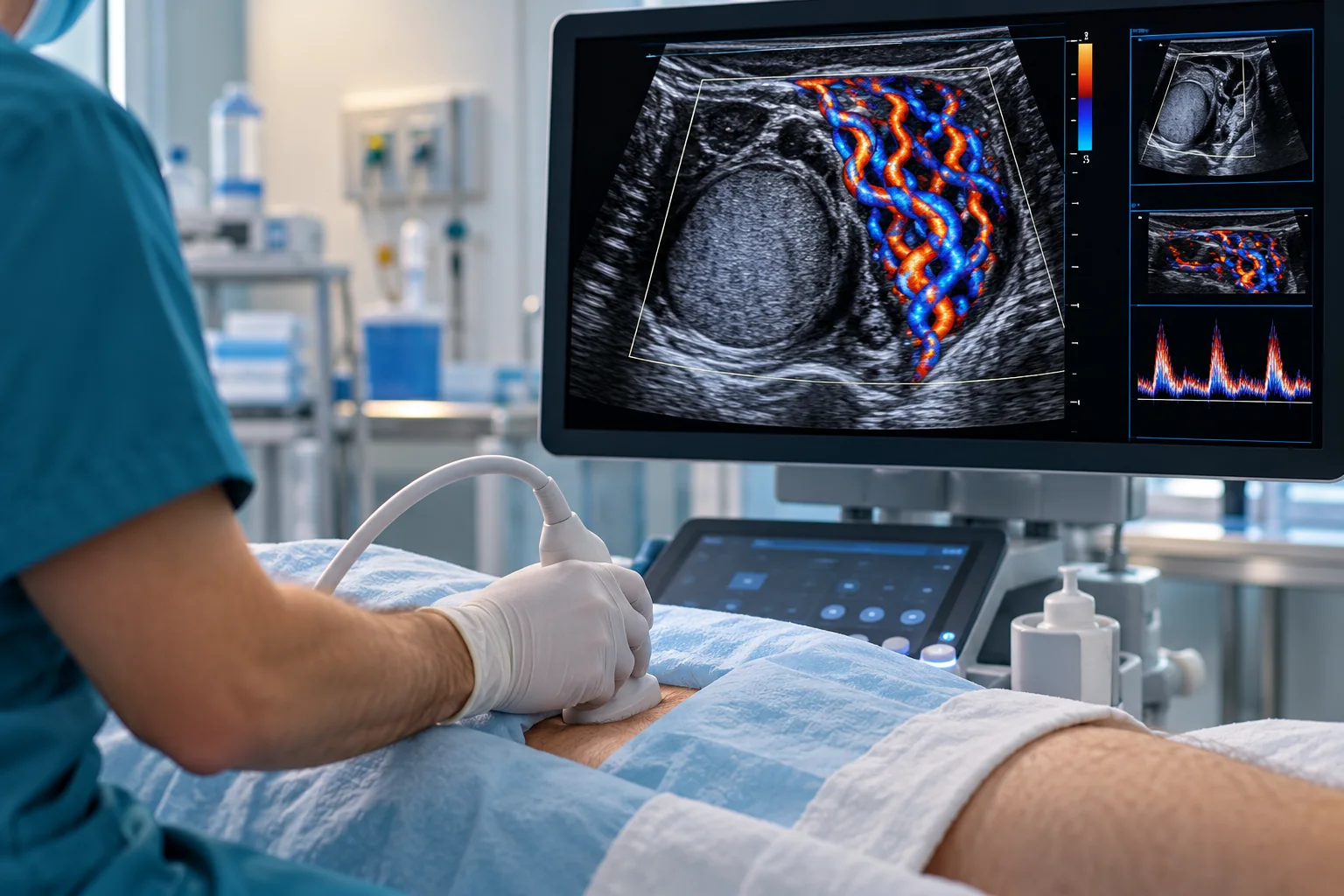
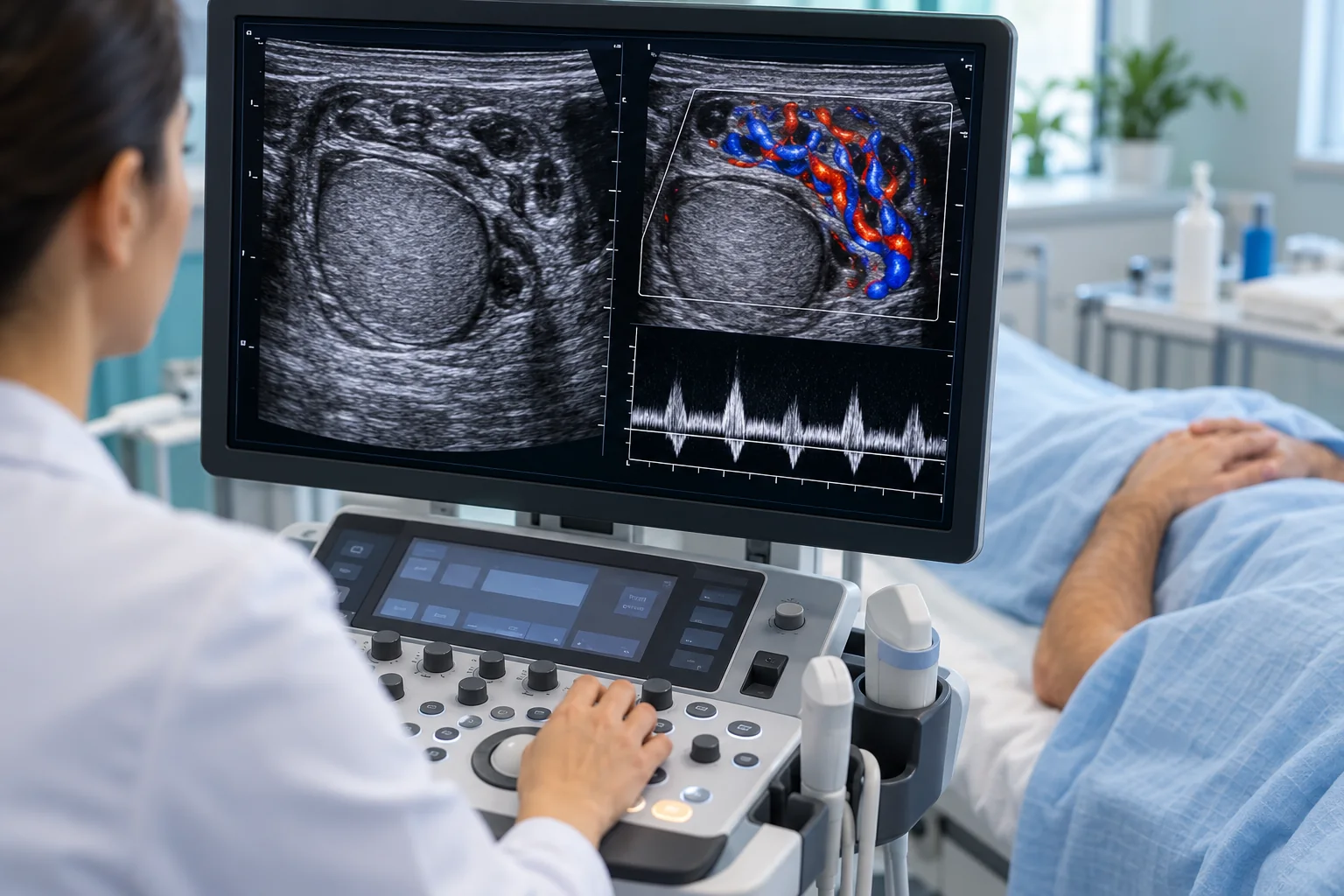
AI-generated Doppler-style illustration highlighting the scrotal veins around a testicle. It is not a diagnostic scan and does not show every variation.
Assessment
Examination, ultrasound and Doppler
Assessment helps confirm the cause of symptoms and determine whether observation, further evaluation or treatment should be discussed.
Clinical examination
A clinician will ask about symptoms, medical history and goals, and examine the scrotum. The examination may be performed while standing and lying down.
Ultrasound or Doppler
Ultrasound may be used when examination findings are uncertain or to assess other causes. Doppler ultrasound can help assess blood flow. If fertility is a concern, the clinician may discuss semen testing and referral to a urologist or fertility specialist.
Treatment is not automatic
The decision depends on clinical findings, symptoms, fertility evaluation and personal preferences. An incidental finding without symptoms may not need a procedure. The AUA/ASRM guideline describes when surgical repair may be considered for selected people trying to conceive; it does not mean every varicocele should be treated or that embolization is automatically preferred.
Treatment choices
How does varicocele embolization work?
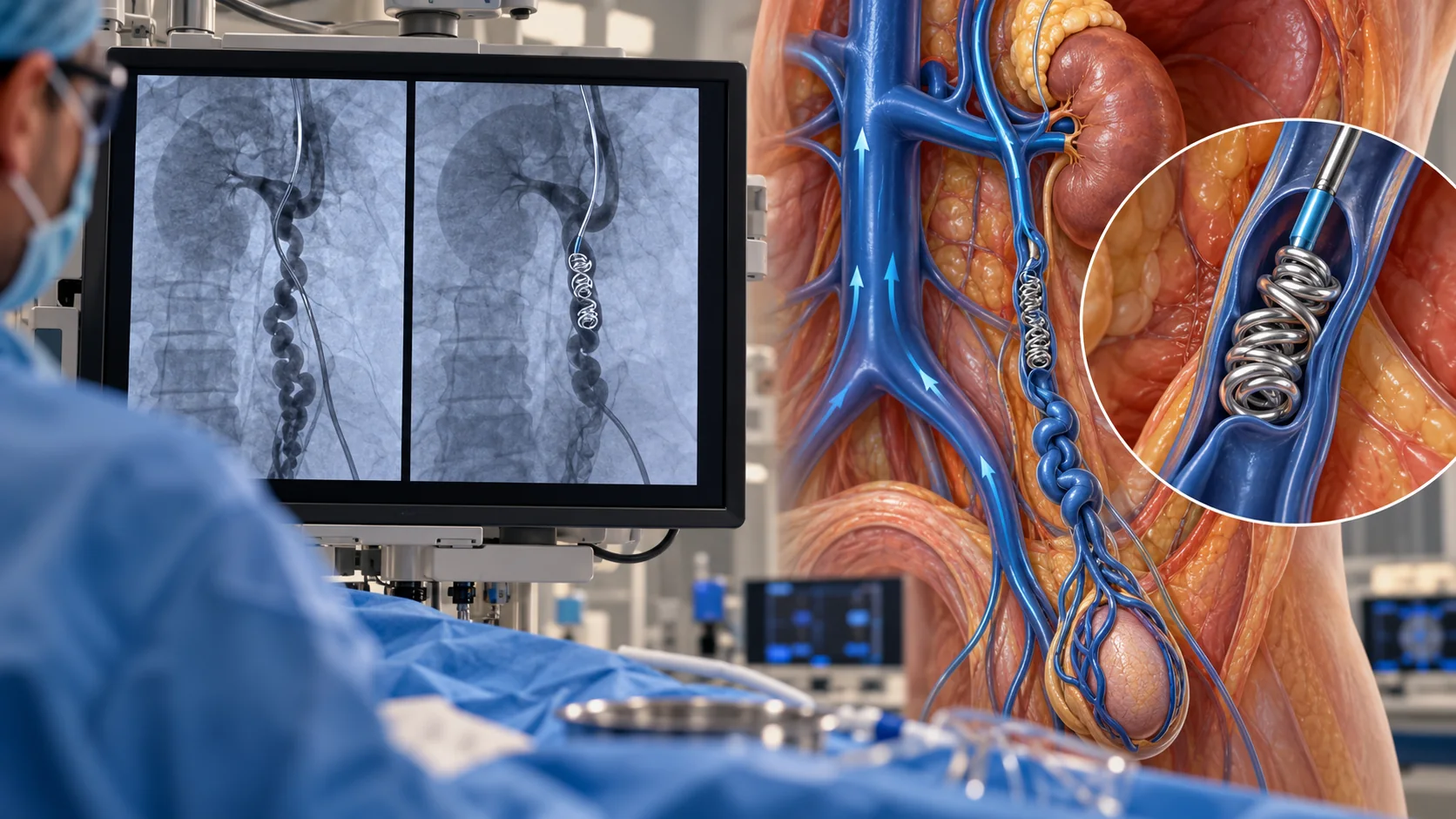
Embolization is a minimally invasive, image-guided procedure. A catheter is used to reach and close the abnormal draining vein so blood can flow through other veins. It is one option to discuss alongside observation or surgical repair.
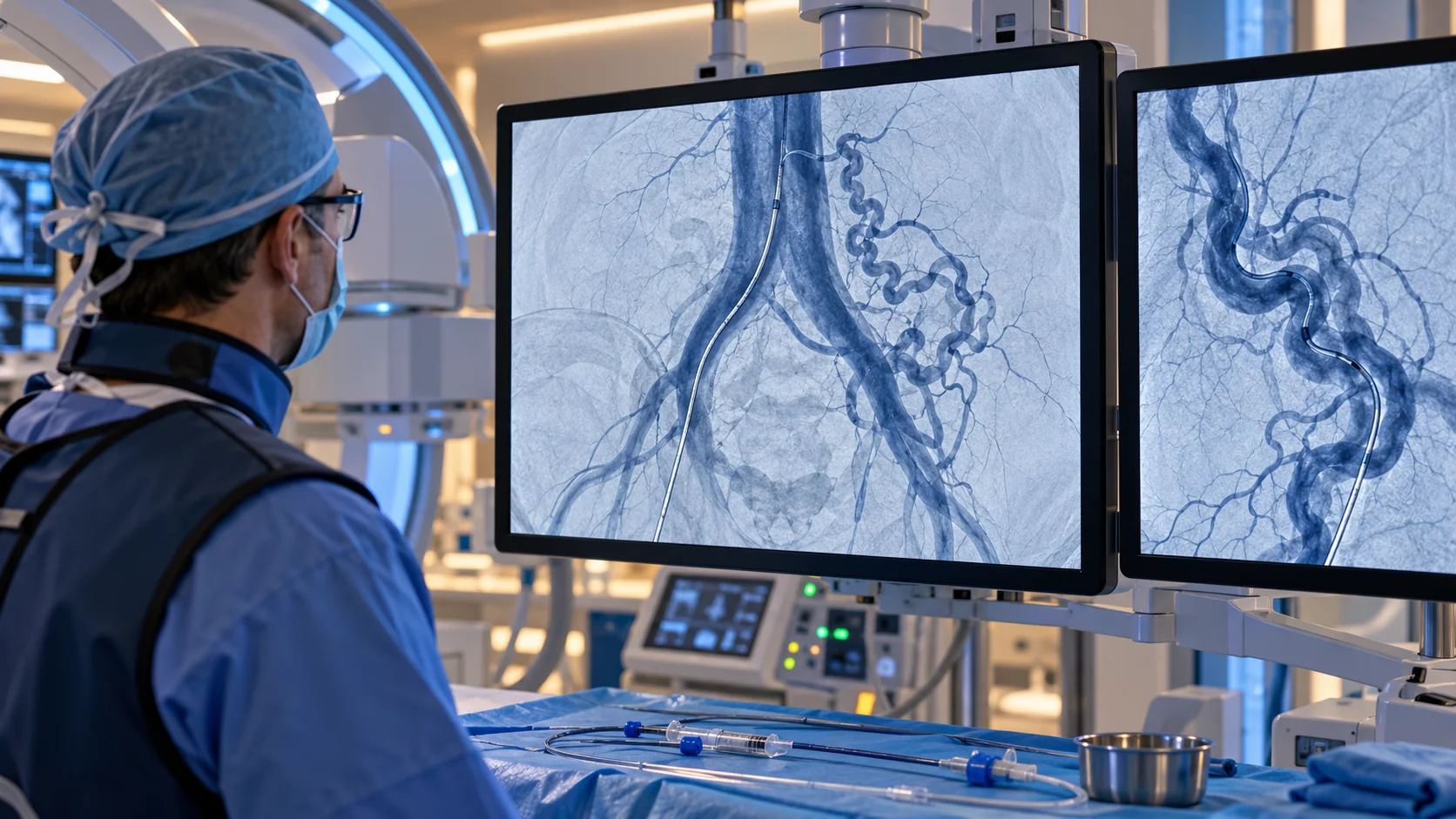
AI-generated medical illustration for education. The exact anatomy, access route and embolic materials vary by patient and centre.
What may happen on procedure day
Plan and prepare
Your team reviews your history, medicines, allergies, imaging and any fertility evaluation. Follow the centre’s instructions about fasting and medicines. You may be asked to confirm your identity and sign consent after discussing the plan.
Access a vein
After local anaesthetic, a small skin opening is made. Depending on the person and centre, access may be through a vein in the neck, arm or groin. A thin catheter is guided through the vein.
Map the veins
X-ray imaging and contrast help the interventional radiologist map the veins and find the route to the target. The team checks the anatomy before treatment.
Block and check
Coils, glue, foam or a combination may be used, depending on the plan discussed with you. A final contrast check looks for continued flow toward the scrotum; then the catheter is removed and the access site dressed.
The approach, materials, sedation and duration vary by patient and centre. The BSIR patient leaflet describes a day-case procedure commonly performed while awake; your own team will explain its specific plan.
Making an informed decision
Potential benefits, risks and limitations
Every procedure has possible benefits and harms. Their likelihood depends on anatomy, health, the technique used and local experience. Ask your clinician to explain risks that apply to you.
Possible benefits
Embolization avoids an operative incision in the scrotum and is often performed through a small catheter access site. It may be considered for selected people after discussion of symptoms, goals and alternatives.
Possible risks
The BSIR leaflet lists bruising and discomfort as minor complications. Redness or warmth around the puncture site may indicate infection. Other risks include a reaction to contrast and, rarely, vein-wall injury that can cause back pain or a hydrocele. Ask your clinician which risks apply to you.
Persistence or recurrence
Symptoms may not improve or may recur, for example if other veins supply the testicle. Sometimes the varicocele is not the cause of the symptoms. A repeat procedure may be considered after reassessment.
Fertility outcomes
Do not assume that treating a varicocele will lead to pregnancy. Fertility depends on both partners and many factors. Discuss realistic goals and the evidence for your specific situation with your clinician and, when appropriate, a fertility specialist.
Recovery
What happens after the procedure?
The team observes you before discharge and provides instructions for the access site, activity, medicines and follow-up. Many people go home the same day, but arrangements depend on local practice and your recovery.
The BSIR leaflet advises keeping the puncture site dry for 24 hours and avoiding heavy lifting for 2–3 days, unless your own team gives different instructions. Follow-up is commonly arranged after at least two months; swelling in the veins can take months to settle. Contact your care team for worsening pain, fever, increasing swelling, redness or warmth at the access site, or bleeding. Follow your discharge and emergency instructions.
AI-generated illustrative home scene; not a patient testimonial or a prediction of recovery. Recovery varies.
Common questions
Questions people often ask
Does every varicocele need treatment?
No. A clinician considers symptoms, examination findings, testicular concerns and fertility goals. Some varicoceles are observed without a procedure.
Does embolization guarantee improved fertility?
No. No individual fertility outcome can be guaranteed. Fertility assessment considers the whole couple and other possible causes; discuss whether treatment is appropriate with your clinician.
Is embolization the same as varicocele surgery?
No. Embolization uses a catheter and imaging to block the selected vein from inside the blood vessel. Surgery treats the veins through an operative approach. A specialist can explain the options available to you.
Does the procedure use X-rays and contrast?
It commonly uses X-ray guidance and contrast to map the veins. Tell your care team about prior contrast reactions, kidney problems, medicines and any possibility of pregnancy when relevant. They can explain how exposure and contrast risks are managed.
Will I need an ultrasound or semen test?
Testing depends on your symptoms and examination. Ultrasound or semen analysis may be discussed when clinically appropriate; not everyone needs every test.
What should I expect after embolization?
Many procedures are planned as day cases. Your team will provide access-site and activity instructions. The BSIR leaflet advises keeping the puncture dry for 24 hours and avoiding heavy lifting for 2–3 days; individual centre instructions may differ.
Further reading
Sources and medical literature
This page summarizes the linked sources and is not a substitute for advice from your own clinician.